How to choose a cardholder that fits your everyday carry
Count the cards you actually use, make room for cash when you need it and compare access as carefully as size, with Secrid to discover.
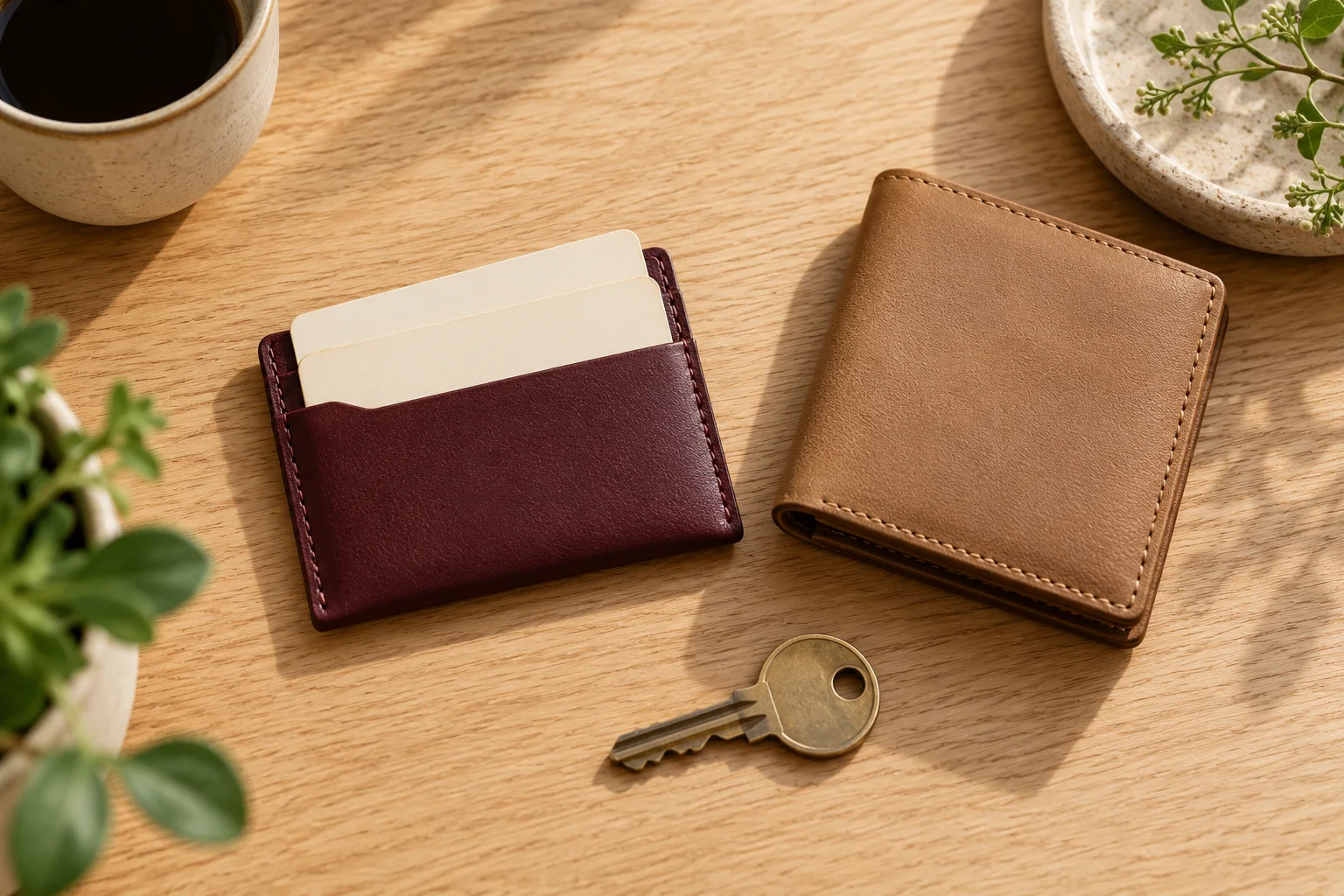
Empty your current wallet first
Lay out what you carry on an ordinary day. Separate the cards you use regularly from old receipts and the passes you need only occasionally. Keep payment cards, transport passes and identity documents in distinct groups, without assuming they share the same dimensions or thickness. This small inventory gives you a useful capacity target. Choosing the smallest possible object makes little sense if you immediately need a second wallet for the things you left out.
Read capacity beyond the headline number
A quoted card count needs context. Secrid specifies a maximum of four embossed or six flat plastic cards in the aluminium core of its Miniwallet, with up to four additional cards in the outer wrap. The difference makes a practical point: raised lettering and thicker cards affect the usable capacity. Compare the exact model with your own stack rather than treating every card as interchangeable. Do not force an extra card into a mechanism to reach a headline total.
Decide where notes and coins will go
If you still use cash, check its place before choosing a card-only format. Secrid describes the Miniwallet’s outer section as space for additional cards and banknotes. That is a different layout from a simple card sleeve. Look at how notes fold, where a receipt would sit and whether a coin compartment is actually included in the version you are considering. A compact wallet and a separate coin purse may suit your routine, but make that a deliberate choice.
Compare access with your real pocket
Trace the listed dimensions on paper and place the outline beside your phone or keys. Think about the pocket or bag compartment where it will live, including the space needed to grip it. If you can handle a display model, try opening it and finding the card you reach for most. A lever, an open slot and a folded cover ask for different movements. Choose the movement you find comfortable rather than assuming that a product photograph demonstrates everyday ease.
Choose the finish after the format
Once capacity and access make sense, compare the material, colour and care instructions of the exact finish. Keep a note of the model name so that you do not accidentally compare different constructions under similar colours. Explore Secrid on Selezio as one route into this category, then save the version that answers your own inventory. A useful shortlist can be precise: the cards it needs to hold, the cash it needs to accommodate and the pocket it needs to fit.
Continue your discovery
Sources
Sources checked on publication.
How to choose a hand wash: texture, scent and everyday use
Look beyond the bottle and compare the details you will notice at the basin, with two Aesop hand washes as practical examples.
Read the story →
How to choose a portable table lamp for your home
Compare footprint, light direction and charging habits to find a small lamp with a clear place in your home, with HAY and Ambientec to discover.
Read the story →